
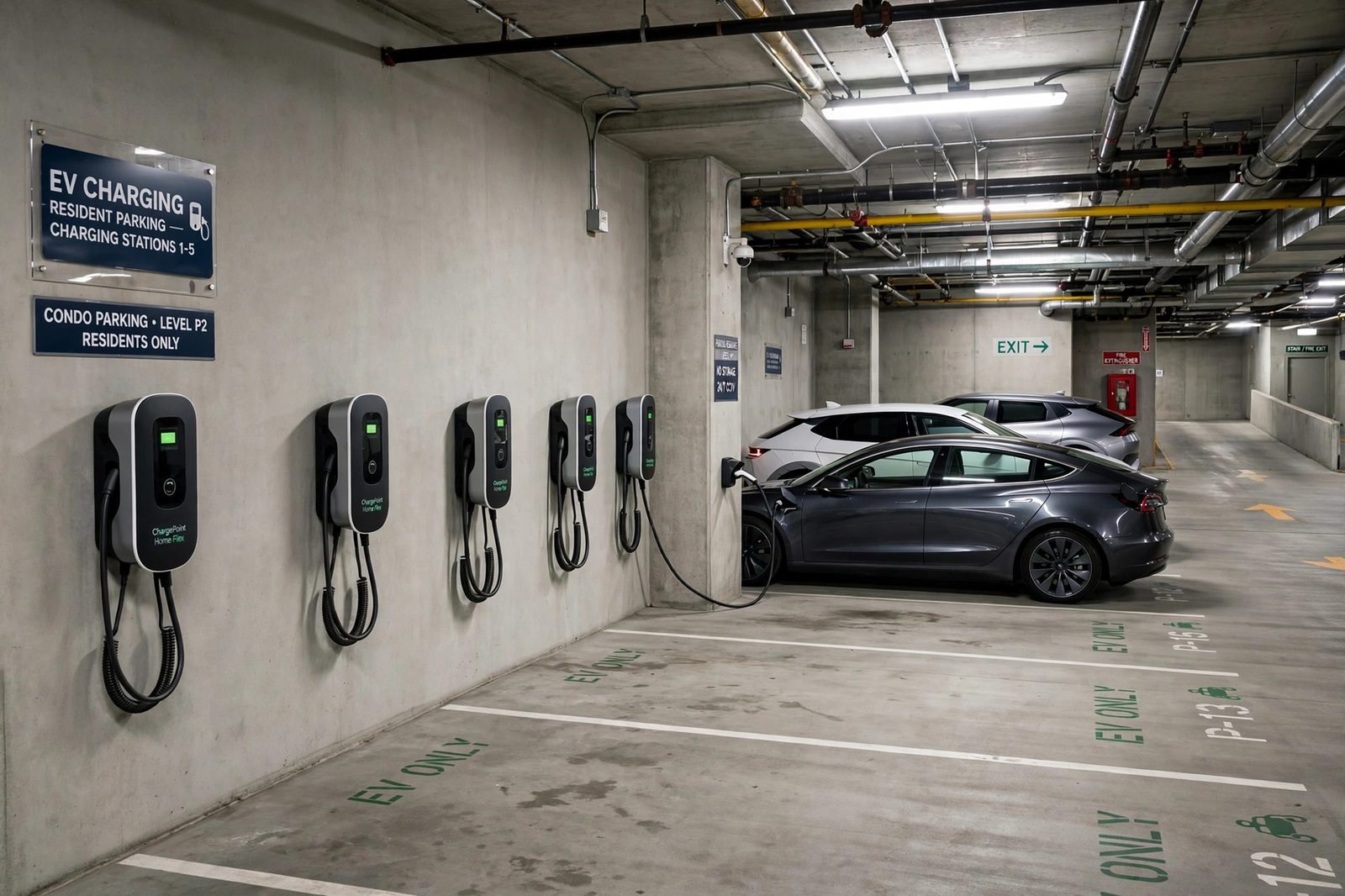
The Core Rule of Condo Charging
Florida Statute §718.113(8) says a condominium declaration or covenant may not prohibit a unit owner from installing an EV charging station within the boundaries of the owner's limited common element parking area, and the board of administration may not prohibit it either. The trade is explicit: you pay for installation, operation, maintenance, and repair, including hazard and liability insurance; the electricity must be separately metered and payable by you; and the association may set reasonable standards that cannot ban the install or substantially increase its cost. Florida Home Charger connects you with licensed and insured independent electricians experienced in shared-garage work.
Your Rights: §718.113(8) for Condos vs §720.3075 for HOAs
Condo owners and HOA homeowners live under different statutes, and the distinction matters. For condominiums, Chapter 718 governs: the owner right described above, separate metering, owner-paid costs, and owner-paid removal if the charger is ever taken out. The association may require compliance with building codes and recognized safety standards, and it may enforce payment of the owner's costs — but it may not use its standards to prohibit the installation or price it out of reach.
For single-family homes in a homeowners association, the parallel protection is §720.3075, which bars HOAs from prohibiting EV charging stations on a lot. The practical difference is the setting: an HOA owner usually controls their own garage and panel, while a condo owner needs a conduit path through common elements and a metering arrangement the association can audit. Either way, the statute sets a floor, not the whole process — your own declaration and rules still define how approval works, so read them before you apply.
The Approval Process, Step by Step
First, read your declaration and rules for the EV or alteration clause, and note whether your space is a limited common element or an exclusively designated spot — the statute's protection attaches to that parking area. Second, send the board or management office a written request describing the proposed location, the equipment, and the conduit route, and ask what their application form and insurance requirements are.
Third, get an electrician's site survey before anyone argues about cost. The survey answers the three questions that decide everything: how much capacity the building service has, how far conduit must run through common elements to reach your space, and where a separate meter or embedded meter can go. Fourth, secure board approval with its conditions in writing, then the Florida EV charger permit and inspection through the city or county — association approval and the government permit are two separate gates, and you need both. Timelines vary by building, so start the process well before you need the charger.
The Three Things That Decide Your Cost
Conduit distance is usually the biggest number. A space next to the electrical room is a short, cheap run; a space three garage levels down or across a parking deck means long conduit through common elements, and that is where condo installs most often exceed the single-family baseline. Our Florida EV charger installation cost guide puts a standard panel-nearby install at $750–$1,500 — treat that as the floor for a condo job, not the quote, and get a site-specific survey for the real figure.
Panel capacity is the second driver. Older condo buildings often have limited spare service capacity, and a full service upgrade for one charger is rarely the answer. Load management devices, which pause or share charging when the building peaks, can frequently fit a charger onto existing capacity — ask your electrician about that option before anyone proposes a five-figure upgrade. The third driver is metering: a separate meter or an embedded meter in the charger, plus any association billing arrangement, adds hardware and admin cost that a single-family garage never sees.
Shared Chargers vs Your Own Charger
Some buildings skip individual installs and add shared chargers on common elements instead. The statute also lets boards install shared charging on common elements, with usage charges set by the board — a different model from your own dedicated charger, where you control access and pay every cost yourself. Shared chargers suit buildings where most owners charge occasionally; a dedicated charger suits an owner who charges nightly and wants their own meter, their own hardware, and no queue.
If your board prefers the shared route, ask the questions that matter: who pays for electricity, how usage is billed, what happens when a charger breaks, and whether a dedicated install remains available to you later. A shared program should not quietly become a reason to refuse an individual install the statute protects.
Garage Types Change Everything
An assigned open-air space, a light-duty carport, a masonry carport with a structural roof, a structured parking garage, and an individual garage are five different jobs. Outdoor and carport spaces need weather-sealed NEMA 4X hardware and conduit that survives rain and sun; structured garages need long conduit runs and fire-code-compliant routing; an individual garage is closest to the single-family case. Condo-heavy markets show the full range — installers working in Fort Lauderdale, West Palm Beach, St. Petersburg, and Tampa see all five types regularly, which is why a photo of your space and your panel tells an electrician more than a phone description ever will.
Whatever your garage type, the sequence stays the same: declaration first, written board request second, survey third, permit fourth. And the charger itself follows the same engineering as anywhere else — a Level 2 installation at 240V, plug-in NEMA 14-50 or hardwired up to 48A on a 60A circuit, sized by the load calculation. When you are ready, Florida Home Charger connects you with licensed independent electricians in your city — call (407) 557-9563 for a free installation quote.
Common Questions
Can my condo association refuse my EV charger?
Who pays for a condo charger install?
Do I need a permit for a condo charger?
What if my parking space is far from the electrical room?
Can the board install shared chargers instead?
Ready to Maximize Your Home Charging Speed?
Speak directly with independent licensed electrical contractors serving your Florida community today.
Call (407) 557-9563